
What Is an AI SEO Agency, and How Does It Differ From a Traditional One?
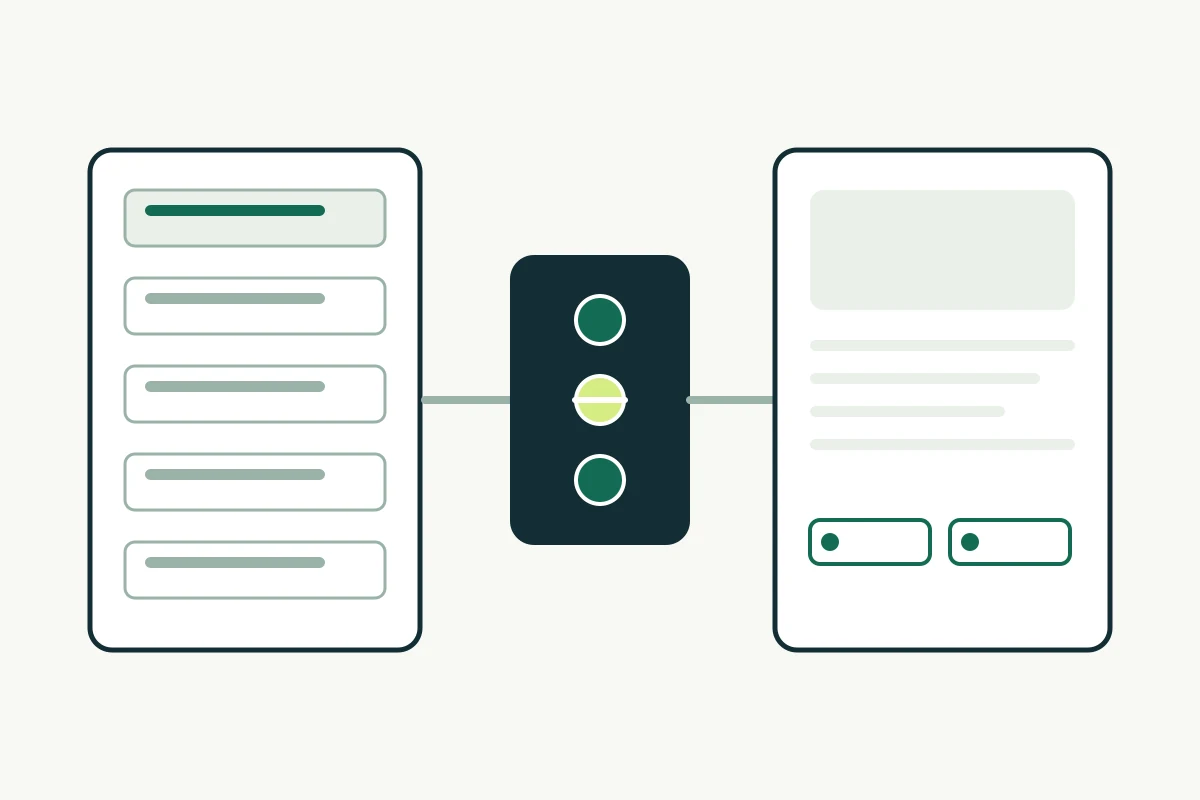
An AI SEO agency, sometimes called a GEO or AEO agency, improves how often and how accurately AI assistants name and cite your brand. A traditional SEO agency improves where your pages rank in Google and how much organic traffic they earn. The two overlap on the same site, but they aim at different outputs and report different numbers.
| Traditional SEO agency | AI SEO agency | |
|---|---|---|
| Main goal | Rankings, organic traffic, enquiries | Citations and recommendations in AI answers |
| Core work | Technical fixes, keyword research, content, links | Entity clarity, answer-first content, third-party mentions, citation tracking |
| What it reports | Rankings, sessions, conversions | Citation share, prompt coverage, AI referral traffic |
| Where its data comes from | Google Search Console, GA4, rank trackers | GA4 AI referrals, repeated prompt tests, AI visibility tools |
| Main risk | Slow to react to AI answers | Overselling an unmeasurable channel |
What does a traditional SEO agency deliver?
A traditional SEO agency delivers technical SEO, keyword and intent research, on-page work, content and link building, and reports them as rankings, traffic and leads. It is strongest on crawlability, site structure, speed and authority, which are the foundations every AI product also relies on. Its usual weakness is that its scope ends at the search results page, so it may not measure whether AI tools name you. Our guide to what B2B SEO services include lists the standard scope.
What does an AI SEO agency deliver?
An AI SEO agency delivers the traditional foundations plus a layer aimed at AI answers. AY Rank describes that layer as entity work (consistent descriptions of the brand across its site and profiles such as Wikidata, G2 and Crunchbase), and Damteq stresses structured, answer-first content. Both also point to third-party mentions and reviews that help AI tools judge credibility, and AY Rank adds regular tracking of whether a brand is cited. Where agencies differ is whether they measure it and whether they can show a baseline. Ask for both.
Is AI SEO a Different Discipline or the Same Work Renamed?
It is mostly the same foundation with a different goal and a harder measurement problem. Damteq argues that AI SEO, GEO, AEO and GSO rest on the same fundamentals of technical health, structure, authority and E-E-A-T-aligned content, and Google's documentation, as cited by Technotize, says no special markup is needed for its AI features. That supports the sceptical view in forums that "AI SEO" is rebranded SEO.
The evidence is more mixed than either camp admits. Ahrefs data, cited by Damteq via Search Engine Journal, found that only 38% of pages cited in AI Overviews ranked in the top ten for the same query, down from 76% a few months earlier. SE Ranking, also via Damteq, found that over 92% of AI Overview results still include at least one top-ten organic source. Ranking helps you get considered, but it does not decide who is cited. The extra layer is real, but a good part of it is foundation work that a traditional agency should already be doing.
On the terms: GEO (generative engine optimisation) and AEO (answer engine optimisation) overlap heavily, and most agencies sell them as one service. Our AEO vs GEO vs SEO guide sets out the differences, and what generative engine optimisation is defines the term. For a plain-language test of whether an AI assistant already knows you, see our AI search visibility audit.
What Should You Ask an AI SEO Agency Before You Hire?
Ask ten questions and judge the agency on whether it can answer with evidence, not on whether it sounds confident. AI search measurement is young, so the best agencies are honest about what they cannot measure. Use the table in a call and score each answer.
| # | Ask | A good answer sounds like | A red flag sounds like |
|---|---|---|---|
| 1 | "Can you show AI referral traffic from a current client in GA4?" | A redacted GA4 report with a date range and sources such as chatgpt.com | Screenshots of one prompt, or "we can't share data" |
| 2 | "What will you baseline in week one?" | A fixed set of buyer prompts, three or more competitors, branded search trend and AI referral traffic | "We will start tracking once the work is live" |
| 3 | "Which prompts and platforms will you track, and how often?" | A named list across ChatGPT, Perplexity, Gemini and AI Overviews, run repeatedly because answers vary | One-off screenshots |
| 4 | "What will you fix on my site first?" | Crawlability, rendering, indexation, structure and consistent brand descriptions | A plan that starts with publishing volume |
| 5 | "Do you guarantee citations or rankings?" | No. It commits to the work, the reporting and the review dates | A guaranteed number of citations or a "#1 in ChatGPT" |
| 6 | "How do you treat llms.txt, FAQ schema and AI markup?" | As low-priority hygiene, with Google's position acknowledged | Selling them as the strategy |
| 7 | "How will you earn mentions on third-party sources, and which?" | Named source types (review sites, industry publications, partner pages) with a placement log | Bought links, private networks or generic listicles |
| 8 | "How much content is AI-written and who reviews it?" | A named subject-matter reviewer and a sourcing standard | Volume targets with no expert review |
| 9 | "Who does the work, and what are the contract terms?" | Named people, monthly terms, notice period and ownership of your accounts | Lock-in, or a proprietary dashboard that holds your data |
| 10 | "What will you protect if traditional rankings fall?" | A plan to keep existing organic performance while adding the AI layer | Advice to stop SEO and move everything to AI |
Judge the agency on whether it can answer with evidence. Questions 1 and 2 matter most.
Question 1 and question 2 matter most. An agency that cannot show a baseline or a client report cannot tell you whether its work moved anything. Questions 6 and 8 catch the two most common shortcuts. The first is treating an llms.txt file as a strategy: Technotize rejects it as one, and our llms.txt guide explains why. The second is publishing large volumes of AI-written pages, which our guide to AI SEO tools shows can hurt rankings without review. Question 10 matters because Damteq warns that shifting away from SEO too quickly can lower organic performance without gaining AI visibility.
For the wider selection checklist, see how to choose a B2B SEO agency: 12 questions.
Which Type of Agency Does Your B2B Business Need?
Choose by testing three things you can check yourself: whether buyers use AI tools, whether you appear in them, and whether your site's foundations are sound. Five tests give a plain answer.
| Test | How to run it | If the result is... |
|---|---|---|
| Sales calls | Count AI-tool mentions in your last 20 sales calls (AY Rank's test) | 0 to 2: stay traditional; 3 to 8: add a scoped AI layer; 9 or more: treat AI search as a primary channel |
| Prompts | Ask ChatGPT, Perplexity and Gemini five buyer questions and count how often you are named | 4 or 5: maintain; 1 to 3: invest to widen it; 0: you are invisible, which is the costly position |
| Analytics | Check GA4 for AI referral traffic and Search Console for falling click-through on AI Overview queries | Near zero but falling CTR: add an AI layer |
| Foundations | Count indexed pages and check technical health | Under about 15 to 20 indexed pages, thin content or technical errors: fix traditional SEO first (Growth Naavik's threshold) |
| Budget | Can you fund two workstreams for six months? | If not, fund the foundations and review AI results quarterly |
These thresholds come from vendors, so use them as prompts to check your own data.
These thresholds come from vendors, so treat them as prompts to check your own data, not as rules. The pattern behind them is consistent: AI search work sits on top of working SEO, so a site with technical problems should fix them first. For many B2B firms the answer is a hybrid. If you sell to technical or research-heavy buyers, the G2 survey cited by Technotize (51% of B2B software buyers start in an AI chatbot more often than Google, March 2026) suggests the AI layer is already worth testing.
How Much Does an AI SEO Agency Cost Compared With a Traditional One?
Published cost claims disagree, and the disagreement is mostly about what is being compared. No independent UK benchmark exists, so read each figure with its source.
| Source | Claim | Currency and evidence |
|---|---|---|
| TheeDigital (24 Aug 2026) | Traditional retainers $1,500 to $5,000+ a month; AI SEO tools and agencies $49 to $2,500+ | USD; the low end is software, not an agency retainer |
| AY Rank (22 Aug 2026) | Traditional $3,000 to $8,000 a month; AI SEO $5,000 to $12,000, a 30 to 40% premium | USD; says it is based on 40+ proposals for mid-market B2B SaaS, not independently audited |
| Whitehat SEO guide (13 Apr 2026) | AEO adds 20% to 50% to SEO cost; basic add-on £400 to £800 a month | GBP; market guide, not a published package |
| Our AEO retainer guide | The one UK AEO price list we found starts standalone AEO at £995 a month | GBP, ex VAT, undated, one agency |
All figures are vendor or guide claims, not independent benchmarks.
The sources disagree on direction because they compare different things. A $49 tool is not an agency, and a hybrid retainer that adds citation tracking costs more than one that does not. The safest reading is that an agency adding measurement, entity work and off-site mentions to a traditional scope charges more for the added hours, not less. Compare scope: how many hours, which platforms, and whether digital PR is in or out. For the detail see what an AEO or GEO retainer costs in the UK, and for UK SEO retainer prices see the UK B2B SEO pricing index and our B2B SEO cost guide.
How Do You Measure an AI SEO Agency's Work?
Measure it with three things: AI referral traffic in GA4, citation share on a fixed prompt set, and the trend in branded search. Add pipeline from prospects who say they found you through an AI tool, which AY Rank suggests asking sales to record.
Be clear about limits. Our guide to how AI search changed B2B buying shows why the channel matters, and how to get cited by ChatGPT covers the page work. Damteq notes that GA4 and Search Console give clear performance data for traditional search, while AI search lacks equivalent transparency, so citation tracking is incomplete by nature. AI answers also vary between runs, so one screenshot proves nothing; a result needs a fixed prompt list, a repeat count and a date. Growth Naavik says AI Overview appearances typically take 8 to 12 weeks and referral gains four to six months, and our AEO guide cites HubSpot's advice to expect early signals in 60 to 90 days. Both are vendor estimates, so set review dates and judge against your own baseline, not against a promise.
How Should You Structure the Engagement?
Start with a scoped, time-boxed pilot on top of working SEO, not a replacement for it. AY Rank suggests layering a 90-day AI engagement on an existing traditional programme, then consolidating under one agency if a single team proves strong at both. Optimist, in its SaaS SEO guide, advises using one agency for SEO and AI search rather than two, because the work shares the same pages, links and measurement.
Agree these before you sign: the prompts and platforms in scope, the baseline date, the review dates (30, 60 and 90 days), what counts as success, and who owns the data. Check the contract against our B2B SEO agency contracts guide. If you want one agency to cover both layers for B2B, our AI search for B2B page describes our approach.
How We Would Answer These Questions
We run a B2B SEO agency and also do AI-search work, so you should hold us to the same table. Our Growth package includes a monthly AI-search visibility check, and our Scale package includes one per product line; the Foundation package does not. We do not guarantee citations or rankings. Our contract is monthly rolling with 30 days' notice, and what we build on your site stays yours. We have not published named client results for AI citations, so this guide does not claim any. See pricing for what each package lists.