
What does zero-click search mean for a B2B company?
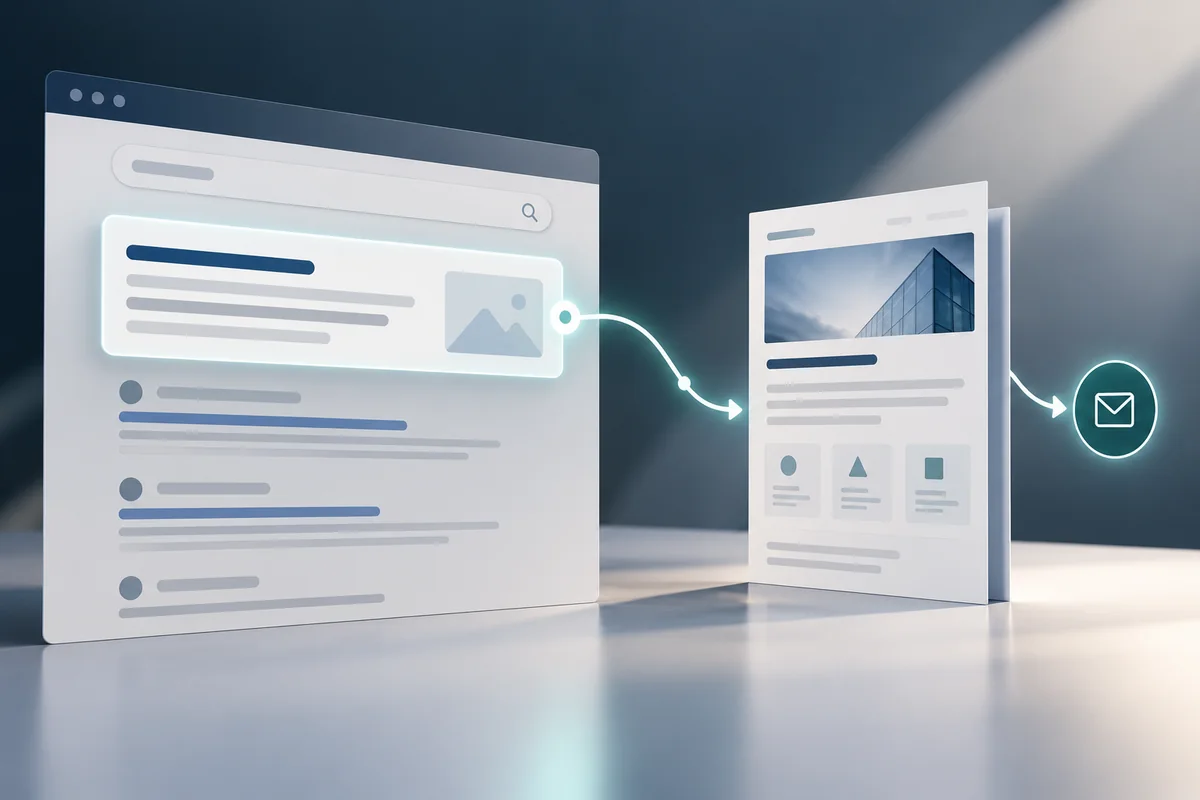
The term describes a search where the user does not click from the results page to an external website. A featured snippet, knowledge panel or AI Overview can satisfy a simple question. That observation is narrower than “SEO stopped working.” The searcher may have learned a brand name, returned later with a more specific query or decided the answer was enough. Standard analytics cannot assign all of those later actions to one unseen search result.
For B2B firms, distinguish basic explanation from buying work. A short definition may be answered on the results page; a buyer still needs to compare implementation, fit, cost and proof. The AI search visibility audit separates a brand mention, a linked citation, a referral visit and a qualified outcome. Use the same separation when discussing zero-click exposure with a board, so a drop in simple-query clicks does not become an unsupported claim about pipeline.
What an AI Overview can and cannot tell a buyer
Google says AI Overviews and AI Mode can surface supporting links and help users explore a topic. The displayed answer and links can vary by query and product mode. An overview may give a useful summary, but a B2B decision often needs the current service scope, contract terms, technical detail and evidence from the provider itself. A page should make those facts clear enough to stand on their own when a buyer does click through.
Which B2B pages are most exposed to lost clicks?
Simple definitions and broad “what is” guides are most likely to be answered without a visit because their core fact fits a short result. That does not make them worthless: they can help a buyer understand a category and connect to deeper pages. But do not build a forecast that assumes every impression on a glossary query will become a session. A service page or a detailed comparison has a different job and may earn a visit when the buyer needs specifics an overview cannot responsibly settle.
Inspect your own query and page data before deciding which pages to change. Group pages by intent: definitions, procedures, comparisons, service pages, case studies and pricing. Compare impressions and clicks over a consistent period, allowing for seasonality and ranking changes. A fall in click-through rate can have several causes, including a changed title, a different result layout or more impressions on lower-intent queries. Avoid attributing it all to one AI feature without evidence.
How should you write for buyers who may see only a summary?
Lead with an accurate direct answer, then add detail that rewards a visit. On a B2B service page, state the scope, buyer fit, delivery process and next step. In a guide, show a decision table, a worked example or a limitation that a generic summary would miss. Give sources for external facts and a review date for changeable claims. This makes the page useful to a person and easier to assess in search systems; it does not guarantee a citation.
Google's site-owner guidance says existing SEO fundamentals apply: allow crawling, make pages discoverable through internal links, put important content in text and keep structured data aligned with visible content. It says no special AI text file or markup is required. Fix those basics before buying a separate “AI Overview optimisation” package that cannot explain how it will measure a business result.
| Search intent | What a short answer may satisfy | What the site must still provide |
|---|---|---|
| Definition | A plain meaning | Context, examples and links to related decisions |
| How-to | An outline of steps | Detailed checks, tools and edge cases |
| Comparison | A broad list of options | Dated criteria, tradeoffs and proof |
| Supplier evaluation | A summary of a company | Scope, pricing, evidence and contact path |
The table is an editorial test. If your page offers only what fits in the middle column, identify what a buyer would still need to decide and add that information where your team can verify it. Do not lengthen a page merely to make it harder to summarise. Better evidence, sharper scope and clearer tradeoffs create the reason to visit.
The ChatGPT citation guide covers the separate question of whether an AI answer links to your source.
How do you measure impact without inventing an AI traffic number?
Use Search Console's Performance report for query and page impressions, clicks and click-through rate. Use analytics for on-site actions, and the CRM for qualified opportunities. Record the query set, date range and page groups. If you manually sample AI answers, log the exact prompt, location context and mode, plus whether the brand was mentioned or the site was linked. One manual sample is not a market-share estimate.
Report the sequence as separate lines: visibility, referrals, enquiries and accepted opportunities. A rising impression count with fewer clicks may reflect more no-click answers, a broader query mix or a weaker result snippet. A rise in qualified opportunities with flat traffic can be a positive commercial result. How to measure B2B SEO ROI shows how to examine the sales handoff without claiming that the final channel caused the whole deal.
What should the next quarter's plan change?
Prioritise high-intent pages that answer procurement questions and low-effort technical fixes that make them accessible. Review broad informational pages for relevance and evidence, then connect them to service, comparison and proof pages. Ask sales which questions still require a conversation after a prospect has searched. Those answers are candidates for useful site content, whether or not an AI Overview appears for the first query.
Review the current result landscape because AI features and reporting can change. Use the AI search service page for the broader approach and request a B2B SEO audit if you need to locate the pages where visibility and qualified demand diverge.
When presenting results, show a small dashboard with the query group, page group and sales outcome on the same date range. Label sampled AI answers as samples. If an executive asks for “AI share of voice,” show the exact prompts and products that make up the denominator, then explain that the figure describes those tests only. This avoids turning a volatile set of answers into a market statistic. It also keeps the team focused on decisions it can make: improve a page, repair access or clarify the offer.
Add a qualified enquiry line to that dashboard. It should use sales-approved criteria rather than every form submission. Pair it with buyer intent: did the visitor come to a definition, comparison or service page? This comparison can show that falling clicks on basic explanations had little commercial effect, or that a service page is losing the visits that matter. Neither conclusion follows from a zero-click estimate alone.
For crawler access and optional AI-facing page maps, use the llms.txt and AI crawlers guide.