
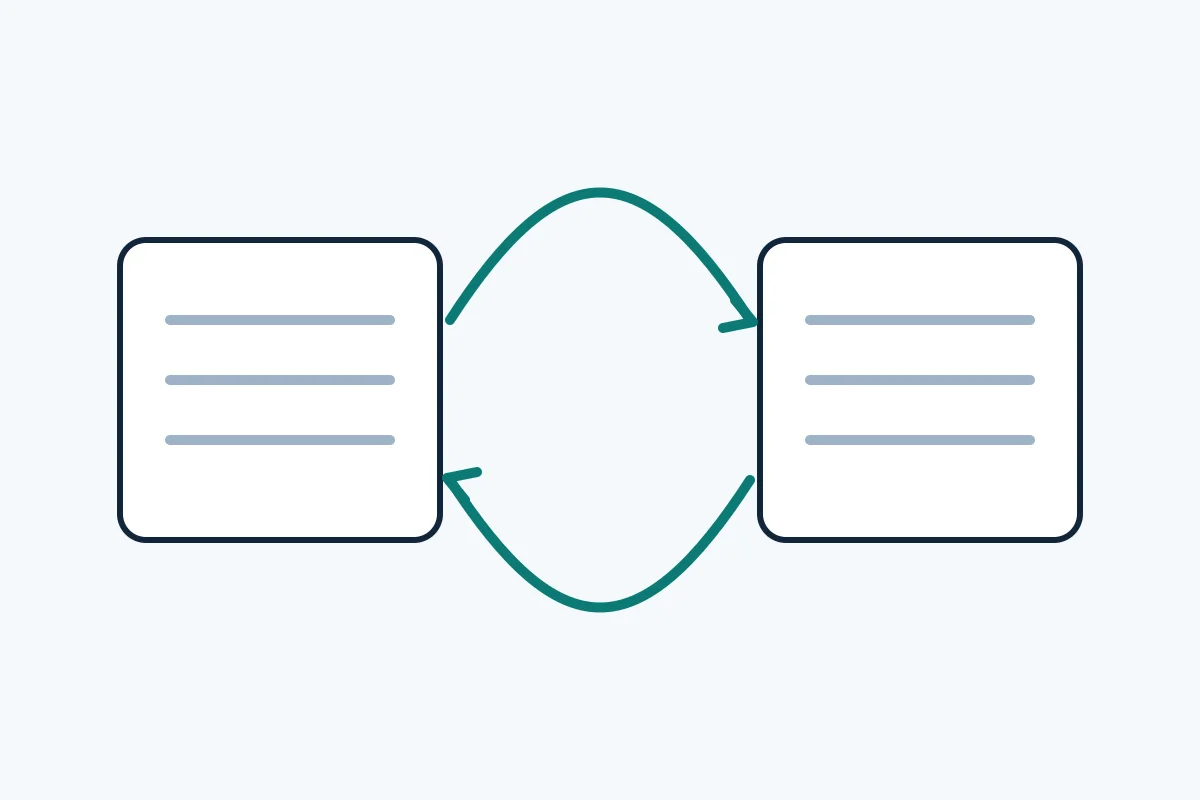
Why the two teams drift apart
SEO reports sessions and rankings. Sales reports calls and deals. Neither team sees the other's data, so each optimises for its own number. SEO writes for the keywords it can see, and sales talks to the buyers it can see. The buyers who search for one thing and ask about another fall between them.
Most of the advice on this topic is to meet more often. A meeting helps, but it does not say what to share. The loop below does.
The loop: what sales sends to SEO
Sales has the most useful input for search: the words buyers use, and the objections they raise. Those signals show where a prospect is in the journey before they ever visit the site, so use them as page and talk track ideas. Two things are worth sending each month.
Questions from calls
Ask sales to log the three questions that come up most often on calls. Use the buyer's words, not the internal product name. Those phrases can point to narrower searches that a keyword tool does not show, which is useful when you test whether a page answers the real question. Turn each recurring question into a heading on an existing page, or into a short new page if it needs its own answer. For the content sales can use in a live deal, see B2B content marketing that feeds the sales team.
Objections that need a page
An objection that comes up in three or more calls in a month is a page that should exist. If the price, the timeline or the fit question is asked over and over, write a clear answer on the site. Then sales can send the prospect to it, and SEO can report whether the page is found.
The loop: what SEO sends to sales
The return flow matters as much. Without it, sales treats SEO as a cost. With it, sales has a reason to use the site.
Send sales three things each month, mapped to the customer journey: the search queries that brought in the most enquiries, the pages those enquiries read before they got in touch, and the one page that changed the most in the period. These give the sales team a short list of pages to share and a sense of what the prospect may already know.
A simple format works. A one-page monthly note with those three items, written in plain language, is enough. Add a lead scoring line only if your CRM already scores leads; otherwise leave it out, because a score nobody trusts adds noise. Keep the note short enough that someone will read it before a call.
One definition of a qualified enquiry
The loop breaks if the two teams count enquiries differently. SEO may count a form submission. Sales may count only a meeting that was booked and held.
Write one definition and have both teams sign it. A workable version names the minimum a qualified enquiry must show: a role in the buying group, a stated problem that the firm solves, and a timeline. Then decide which stage each enquiry is in when it arrives, and who moves it to the next stage.
Measure SEO against that definition, not against the form count alone. The number of qualified enquiries from organic search is the figure both teams can defend.
The monthly rhythm
A short monthly meeting holds the loop together. The SEO reporting article explains which figures to bring to it. Keep it to thirty minutes with three standing items: the call questions, the search and page data, and the qualified-enquiry count. Assign one owner for each item, and record the decisions in one place.
Quarterly, review the loop itself. Are the questions being used on pages? Are the pages being used in calls? If not, the loop has stopped, and the fix is in the handover, not the meeting.