
What the strategy has to do
A B2B SEO strategy has one job: put the right pages in front of the people who decide to buy, at the moment they search. It is not a list of keywords or a monthly content count. Every step below should either make a commercial page findable, make it answer a buyer's question, or show the result to the people who fund the work.
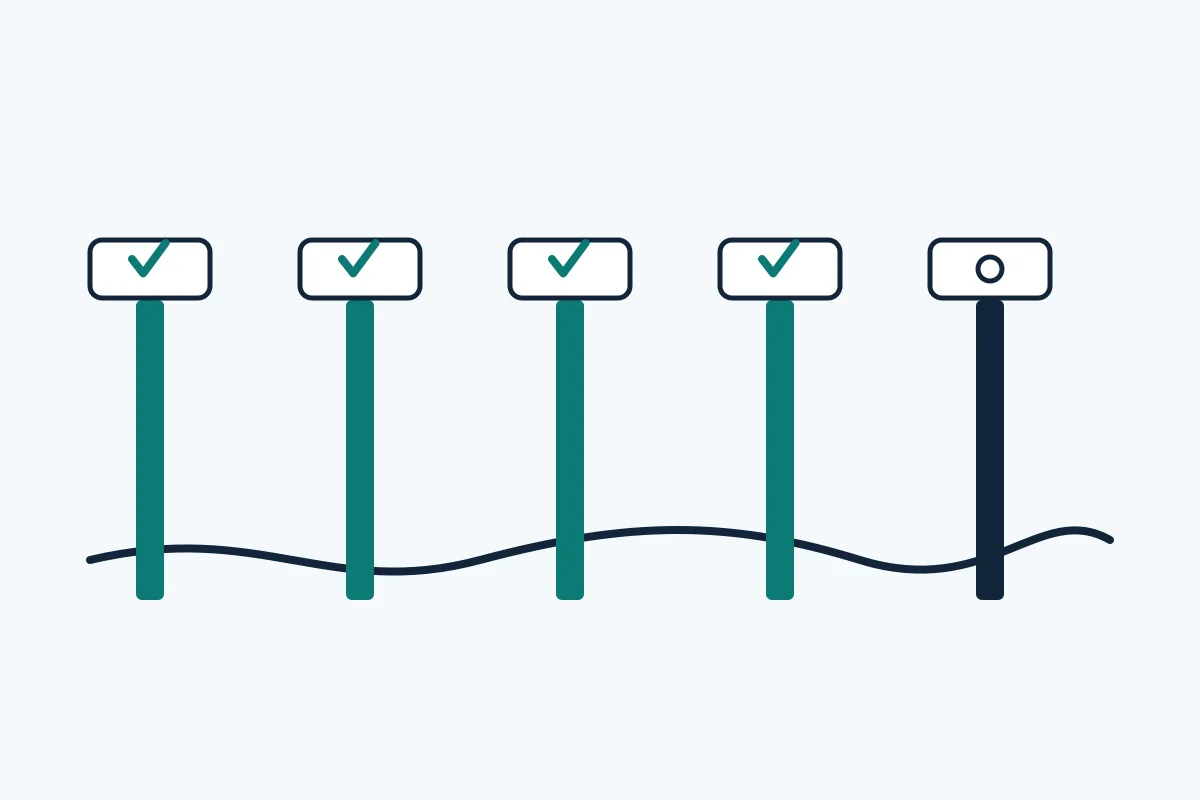
The order of work
- Audit indexation, so search engines can find and store the commercial pages.
- Map buyer intent, so each role's questions are known before any writing starts.
- Build the pillar and cluster, so content supports the core service in one connected set.
- Earn authority, through research, partnerships and digital PR.
- Report to the board, on a fixed cadence tied to enquiries.
Step 1: Audit indexation
Before you write anything, check that the commercial pages can be crawled and indexed. Look for pages that return errors, pages blocked by a robots rule, duplicate titles and templates that load their content only through scripts. Fix those first. A strong article on a page Google cannot index earns nothing. For the technical checks in more depth, see technical SEO for B2B.
Test: the main service and industry pages are indexed and load their main content without a script. If not, stop and fix them.
Step 2: Map buyer intent
Build a buyer persona for each role in a typical buying group: the practitioner who runs the work, the evaluator who checks the approach, and the budget holder who signs. For each persona, run keyword research on the questions it asks in search and in sales calls. Group those questions by funnel stage: problem, comparison and decision.
Test: every role has at least five questions written down, and each question has a stage. If a role has no question, you do not yet know it well enough to write for it.
Step 3: Build the pillar and cluster
Choose one pillar page for the core service. The pillar explains the service, who it is for and what it costs to start. Then add cluster pages that answer the specific questions from Step 2. Each cluster page links back to the pillar, and the pillar links out to the clusters.
Test: each cluster page answers one question, links to the pillar and to one related cluster page, and is written for one role. Pages that try to answer every role at once tend to answer none of them well.
Step 4: Earn authority
Links and mentions tell search engines that others trust the site. For B2B, the most reliable routes are original research, useful tools or templates, partnerships with complementary firms and digital PR that offers a real story. Avoid bought links. They carry risk and rarely bring buyers.
Test: at least one link-earning asset is live, and each new link comes from a source your buyers would read.
Step 5: Report to the board
Report on a fixed cadence, such as monthly for operational measures and quarterly for the board. Use the key performance indicators (KPIs) that tie to the business: enquiries from organic search, the share of enquiries that reach a sales conversation, and the pages those enquiries came through. Rankings and sessions are supporting measures. See B2B SEO measurement for how these KPIs are set up.
Test: the board can see enquiries from organic search for the last quarter, with the pages behind them.
The gate after each step
A gate is a short check you run before you move on. Passing a gate is not a score. It is a decision that the next step will build on something real.
- After Step 1, the commercial pages are indexed, or the blocking issues are logged with an owner.
- After Step 2, every role has a question list, and each question has a funnel stage.
- After Step 3, the cluster pages link to the pillar and cover the questions from Step 2.
- After Step 4, at least one asset is live and the links it earns are reviewed.
- After Step 5, the first report has been reviewed by someone who funds the work, and one decision has been made from it.
If a gate fails, go back to the step that failed. Do not add more content to fix a gap in the audit.
What to defer in the first 90 days
Most B2B firms should defer three things in their first 90 days. Defer a large content volume, because a small set of well-built pages does more. Defer broad link building, because a few earned links are worth more than many weak ones. Defer advanced technical projects, such as a platform migration, unless the audit shows a blocking problem.
Keep the first 90 days focused on Steps 1 to 3, with Step 5 started early so the board sees the first numbers. For a startup version of this timeline, read SEO for startups: the first 90 days.